Yin and Yang
Yin and Yang describe complementary forces: receptive and active, quiet and expressive, inward and outward. The reading uses them as a lens for rhythm, not as a fixed label.
Bagua Astrology / I Ching Culture / Five Elements
Enter your date of birth and approximate birth-time window to begin a Bagua-inspired cultural reading shaped by the I Ching, Yin-Yang balance, and Five Elements symbolism.
Example: August 15, 1993, between 11:00 PM and 1:00 AM
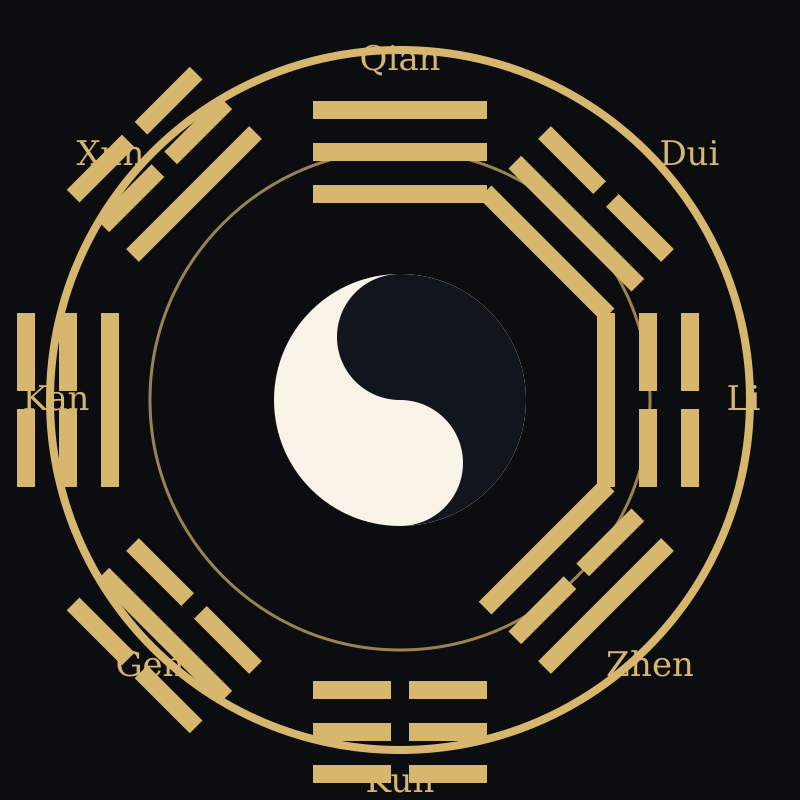
A symbolic system of change
The I Ching, often translated as The Book of Changes, uses Yin and Yang lines to describe cycles of transformation. The eight trigrams represent Heaven, Earth, Thunder, Wind, Water, Fire, Mountain, and Lake.
In this modern experience, those symbols are presented as a reflective framework: a way to explore temperament, momentum, decision style, and personal seasonality without making deterministic claims.
Foundations
Yin and Yang describe complementary forces: receptive and active, quiet and expressive, inward and outward. The reading uses them as a lens for rhythm, not as a fixed label.
Wood, Fire, Earth, Metal, and Water describe patterns of growth, warmth, grounding, refinement, and flow. They help frame tendencies and points of balance.
Each trigram carries a natural image and a style of action. Together they form a compact symbolic language for reading change and context.
When two trigrams are combined, they create a hexagram. Hexagrams are traditionally used to reflect on timing, pressure, opportunity, and adjustment.
One-time purchase
FAQ
Traditional East Asian timing systems give importance to the hour of birth. If you do not know the exact time, an approximate window is fine.
This is a front-end demo. The payment prompt is ready for integration with Stripe, PayPal, or another compliant checkout provider.
No. The reading should be understood as symbolic cultural content for reflection and entertainment, not as a guaranteed prediction or decision authority.